Morning: focus
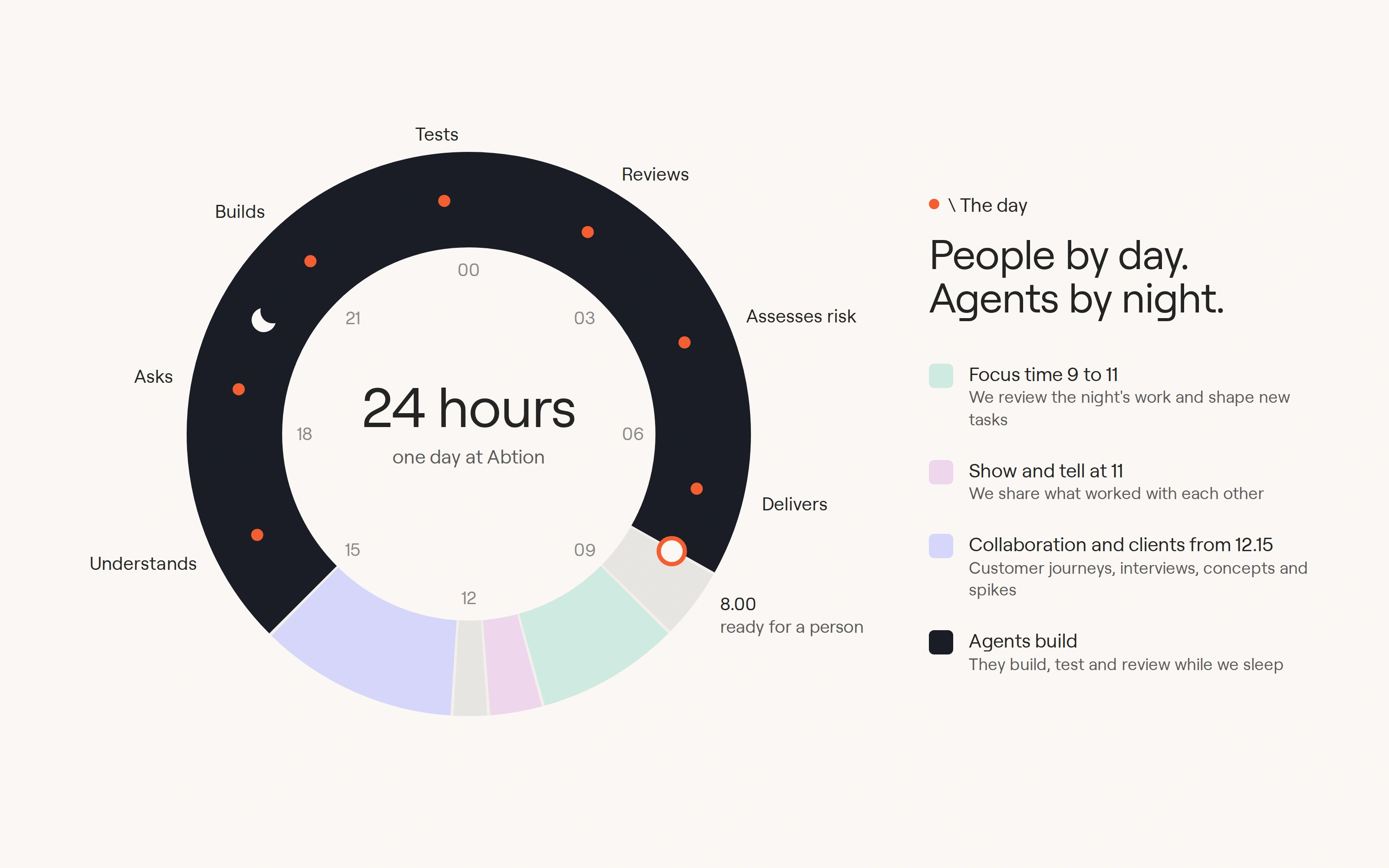
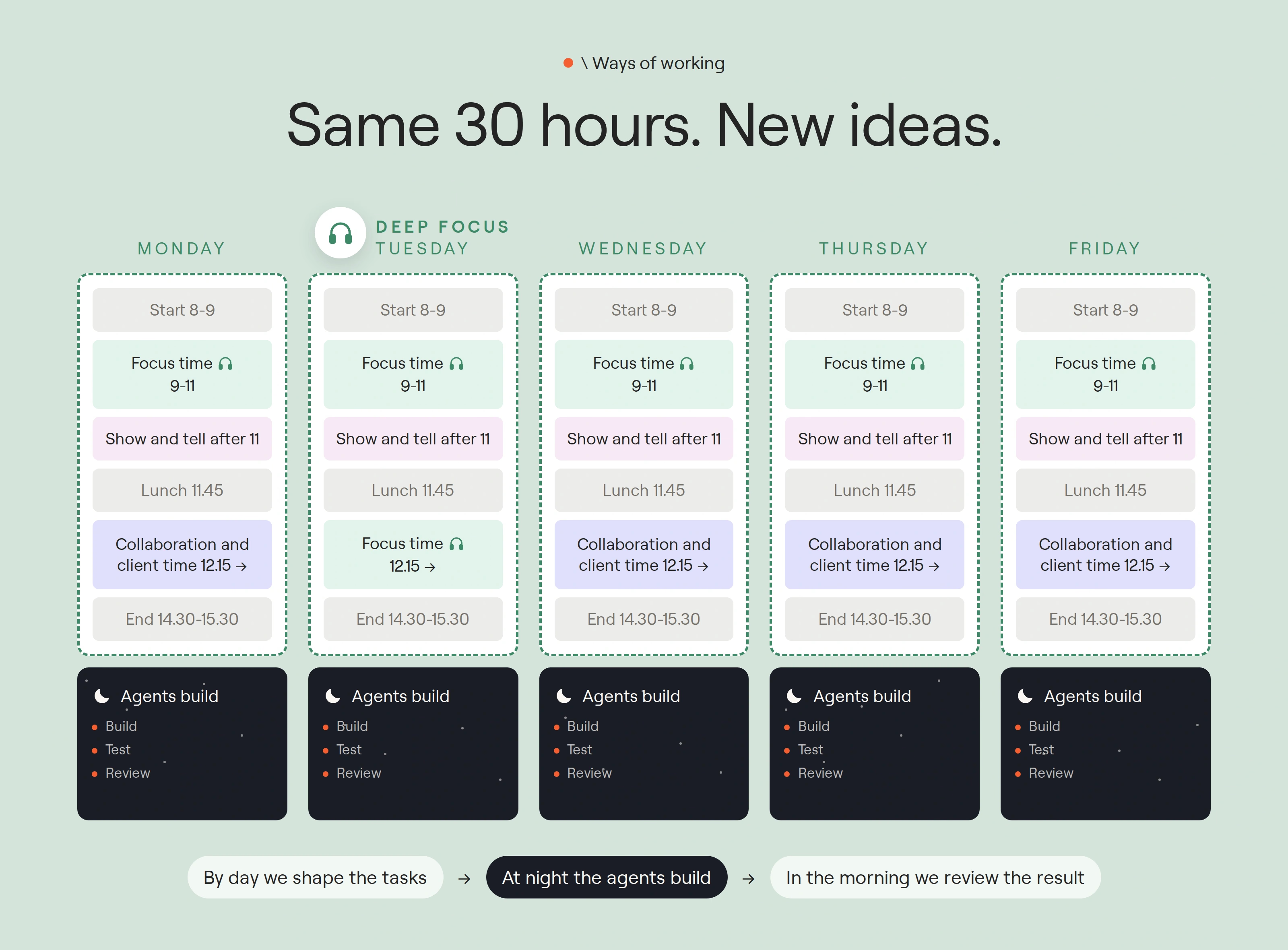
From 9 to 11 it is focus time. The headphones go on, and there are no meetings. First we review what the agents built overnight. Then we shape the next tasks. What should the user be able to do, and how do we know it works?
After 11 we hold show and tell. It might be a good prompt, a new skill or a mistake we do not want to make again. What one of us learns quickly becomes the whole team's. This is also where we do the first spikes, and configure and prepare tasks for the AI agents.
Afternoon: people
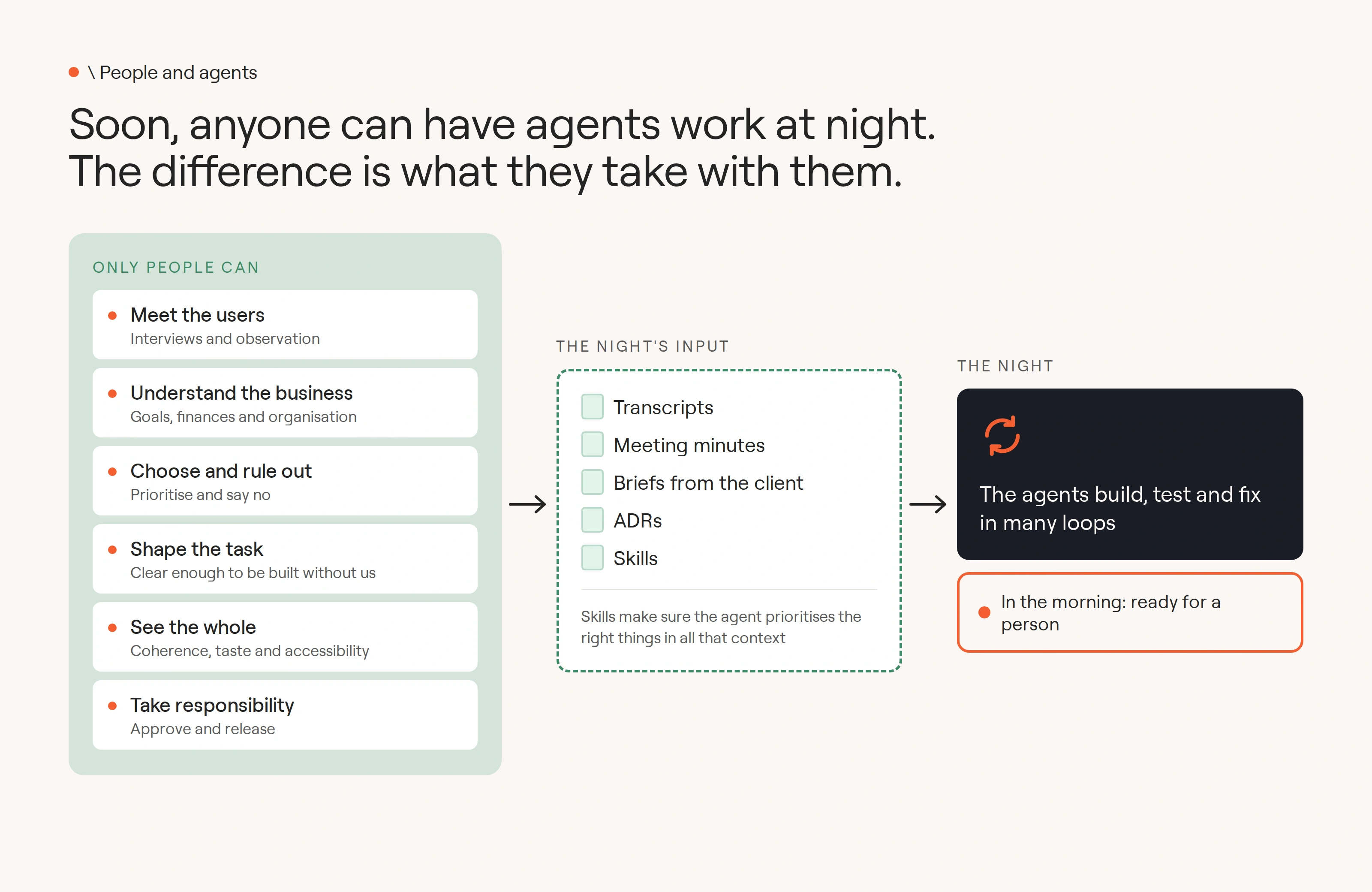
From 12.15 there is time for collaboration and clients: customer journeys, interviews, concepts and spikes, which are short technical experiments. This is the work where you have to understand other people and make choices together. All the things AI cannot do.
When we go home, the agents carry on.
The agents run all night. It is extremely effective.
At night the agents work on the tasks we have shaped during the day. Every task runs in a loop:
- Understands. The agent knows everything about the project. It sees the transcripts, the briefs and all the content created in the project: the sketches, the code, the minutes and the decisions already made. Through skills, we help the agents understand what matters and what to leave out.
- Builds. The change is made according to the conventions written down in the code base.
- Tests. Code style and types are checked, and the automated tests run both on the individual parts and all the way through, the way a user would.
- Reviews. The agent reads its own change again with fresh eyes.
- Fixes. Whatever the tests and the review find is fixed. Then the loop starts again.
A night leaves room for many rounds. The loop continues until all tests are green and the review finds nothing more. In the morning the change is ready for a person to judge, together with a log of what the agent has done.
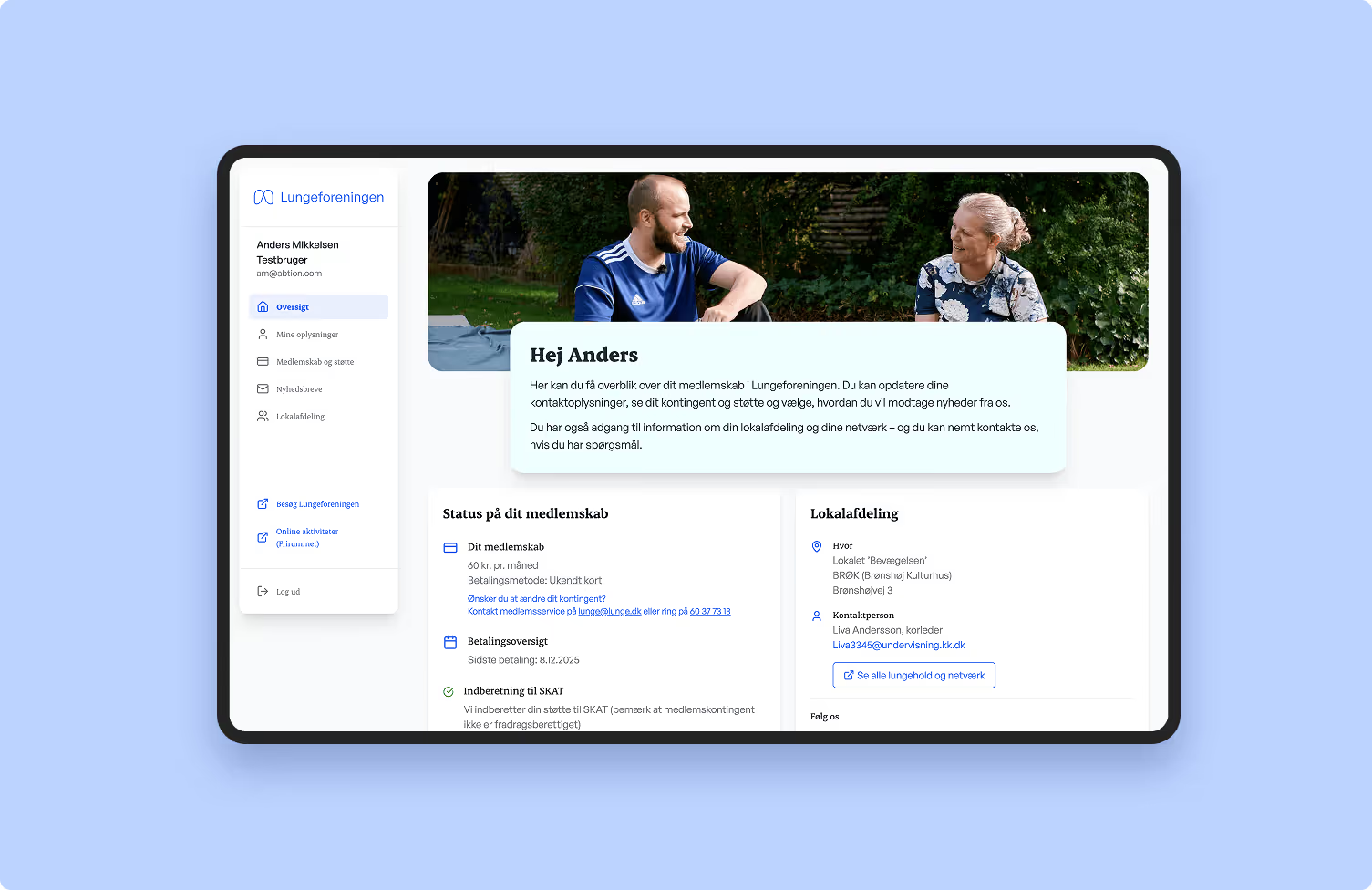
At DSV Transport, for example, this means that a task shaped during the day can be ready to test on their own phones the next morning.