SAMSON: Research aimed at separating side effects from the nocebo effect

In short
Statins lower cholesterol, but many patients stop taking them because of muscle pain. In SAMSON-2, patients switch between statins and sugar pills for 36 weeks without knowing when, and score their pain in the app every morning. In the end, their own data shows whether the pain came from the pill or from the expectation – the nocebo effect.
Client
Bispebjerg Hospital
Duration
1 month
Industry
Healthcare
Services
UX/UI Design
User Research
App development
MitID integration
React Native
Validation documentation
When expectation hurts
Cholesterol-lowering medicine is given to patients to lower their cholesterol and so prevent blood clots and other cardiovascular disease. But some patients experience muscle pain and therefore choose to stop taking the medicine. That happens to about one in three within the first year.
When patients stop treatment, the consequences can be serious. For every 100 patients who stop, there will be one extra case of blood clot, stroke or death each year.
The medicine is called statins and is one of the most widely used in the world. 800,000 Danes got a prescription last year. In trials where participants do not know whether they get real medicine or sugar pills, just as many get muscle pain.
So there is much to suggest that the pain often does not come from the medicine, but from the expectation. This is called the nocebo effect. If you have read about side effects online, heard about them in the news or had a bad experience before, you can actually feel them.
And doctors have no tool to find out whether the pain comes from the pill. Today, treatment is usually stopped and another statin tried later. Many end up without treatment.
So the question was: How do you find out whether the side effects are real? And how do you get patients to resume a treatment they need?

“With SAMSON, patients can investigate their own experience with the medicine. Inspired by Spotify Wrapped, we make months of data easy to understand and create a better starting point for the conversation with the doctor about whether to resume treatment.”
Product Manager, Abtion
A study that starts when treatment has stopped
Together with the Department of Clinical Pharmacology at Bispebjerg Hospital, we developed the app for SAMSON-2 on the Respons platform. It is a trial where each patient is their own trial. Patients who have stopped at least two different statins because of muscle symptoms are offered to take part at 11 lipid clinics across Denmark.
The patient gives consent at a visit to the lipid clinic and logs in to the app with MitID. The rest of the trial takes place at home, and most check-ups are phone calls.
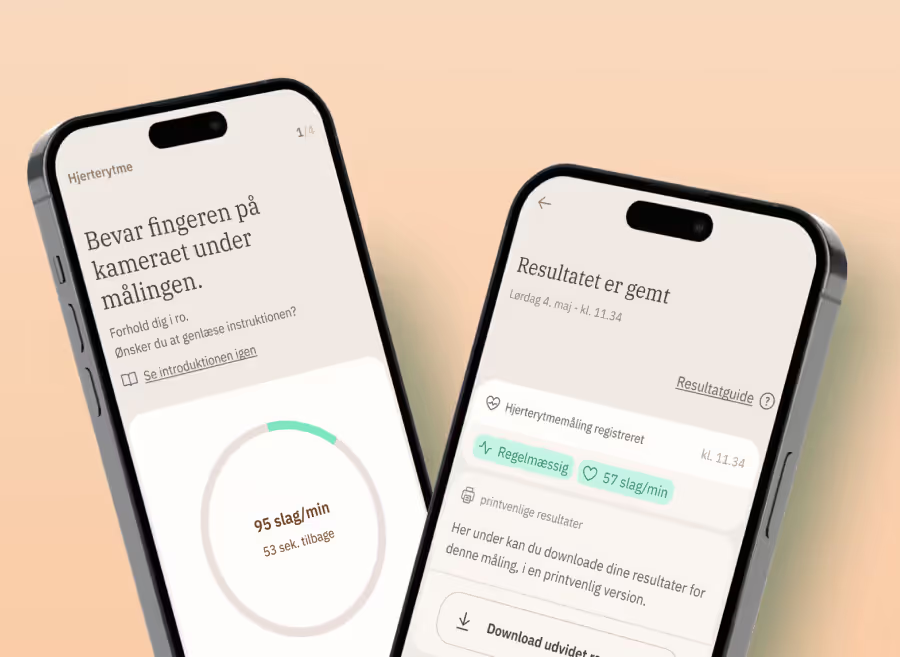
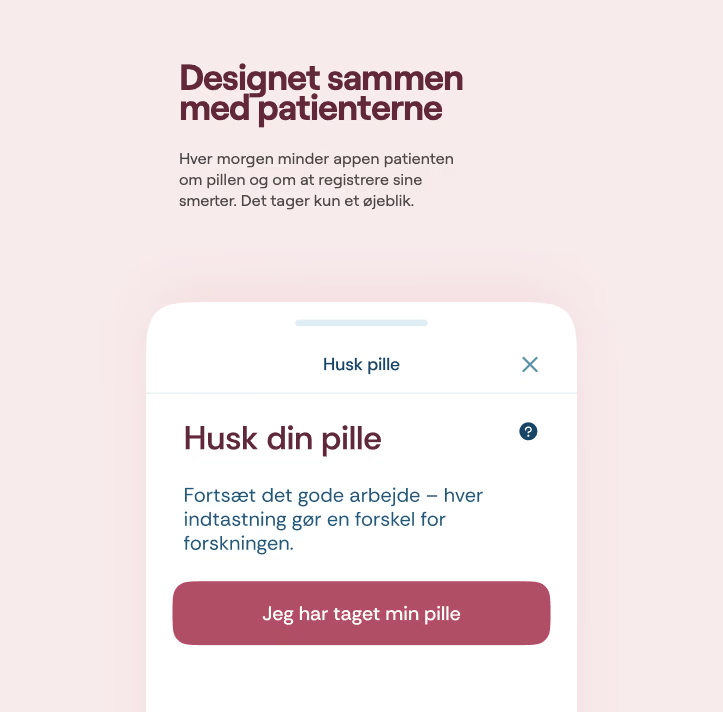
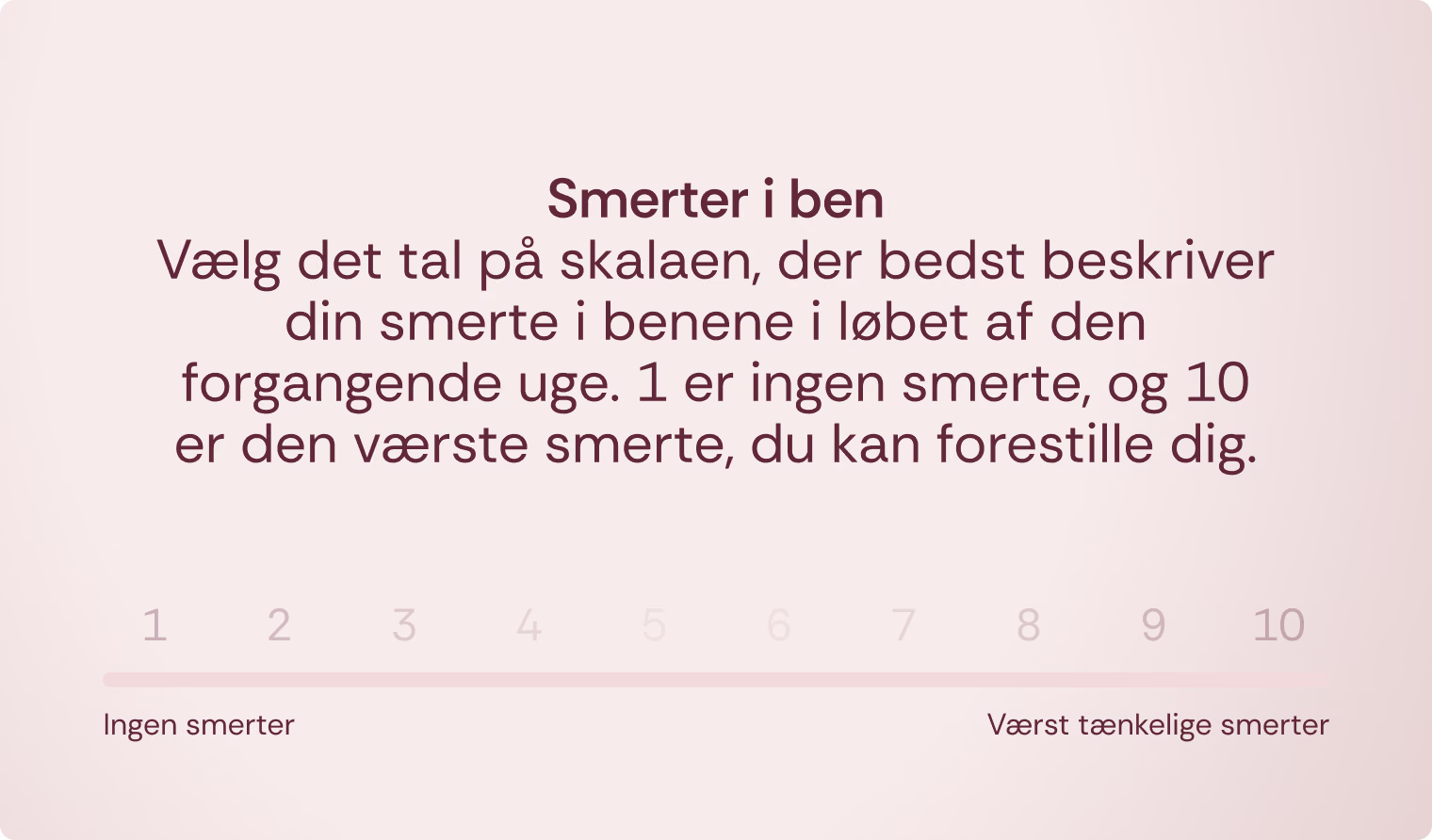
The patient then switches between six periods of four weeks, three with real medicine and three with sugar pills, without knowing which period they are in. Every morning the app reminds them to record whether they have taken the pill and how much their muscles hurt, and every month they answer questions about their quality of life.
Patients' wishes have shaped the design of the app, from the daily registration to the way the result is shown. Because when you feel unwell, it should be easy to say so.

A clear overview
Built on the patient's own data from the study, the overview shows week by week how the pain followed the pills.
How much do your legs hurt from 0 to 10?
This is how the app gathers the patient's own answers from the whole study into four groups. The figures are an example from the app.
- No pain (0)38 %
- Mild pain (1–3)12 %
- Moderate pain (4–6)32 %
- Severe pain (7–10)18 %
“Abtion quickly got to grips with the requirements of a clinical drug trial, from login to documenting the validation.”
Senior Registrar, PhD, Department of Clinical Pharmacology, Bispebjerg and Frederiksberg Hospital
The solution
Their own data rather than a doctor's message
After 36 weeks the blinding is broken. At a visit to the lipid clinic, the patient and the doctor look together at the patient's own measurements from the periods with medicine and with sugar pills.
The idea is simple: What you have measured yourself is more convincing than a doctor telling you. The patient can see for themselves whether the pain followed the real pill or came with the sugar pill too. The hypothesis is that this makes it easier to resume treatment.
A tool doctors are missing
Today, doctors have no tool to determine whether the pain comes from the medicine. SAMSON-2 will try to show whether the patient's own data can become that tool.
That is why the study compares the participants with patients receiving usual care. The goal is to see how many are still taking the medicine six months after the trial.
If it succeeds, the gain is large. Every patient who continues a treatment they need has a lower risk of blood clots and stroke. And with 800,000 Danes on statins, even a small difference can mean a lot.
“In SAMSON-2, participants score their muscle symptoms in the app every morning for 36 weeks, and they log in with MitID. This makes it possible to run a double-blind N-of-1 trial at 11 hospitals, where each patient is only compared with themselves.”
Senior Registrar, PhD, Department of Clinical Pharmacology, Bispebjerg and Frederiksberg Hospital
We build with you, not just for you
Health solutions rarely fail on the technology, but when they are built far from the clinic. That is why we work closely with you all the way – at a pace that fits your clinical everyday.
Teknologi med blik for patienten
Amalie Lange
Product Manager

Abtion \
Vi kender sundhedssektorens udfordringer. Lad os bruge den erfaring til at skabe den rette løsning sammen.